Tom Mason
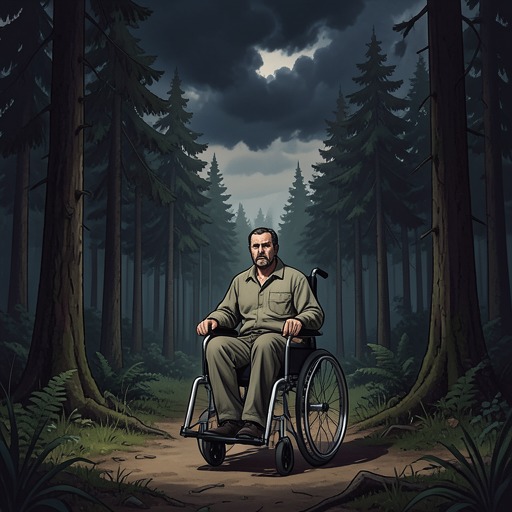
The Chemistry of DeathTom Mason’s apparent harmlessness is central to the revelation that he is the killer: a quiet, overlooked figure in the village, he had been able to remain in plain sight until forensic evidence connected him to Sally Palmer’s murder and David Hunter found him in the cellar where Jenny Hammond was held.
Identity and Concealed Role
Mason is George Mason’s grandson. David initially finds the idea that he could be the killer difficult to accept, because Mason seems placid and uncomplicated, unlike someone capable of planning the crimes. That impression is part of what has allowed Mason to escape notice. He has worked around the churchyard and village green, blending into familiar surroundings and remaining in his grandfather’s shadow. David’s realization is not that Mason has suddenly appeared in the village, but that he has been there all along, visible yet effectively unseen.
A material clue changes the meaning of that familiar presence. David recalls noticing the smell of bitumen near the churchyard, a substance that could have clung to Mason or his tools after he tried to seal his grandfather’s bedroom. It matches bitumen found in the knife cut in Sally Palmer’s vertebra. The connection turns a faint, previously neglected observation into evidence that implicates Mason, and brings David’s suspicions into focus. When David reaches the cellar and calls out for Jenny, Mason emerges from the shadows. His familiar, harmless expression remains, but the setting and his bloodstained clothes make the danger he represents unmistakable.
The Cellar Confrontation and Jenny Hammond’s Rescue
The wedding dress in the cellar, bloodstained and draped over a chair, brings David Hunter out of his shock: he calls for Jenny Hammond and receives a movement from the shadows. The discovery becomes a direct confrontation when Tom Mason attacks David. Jenny, despite her weakened condition, manages to intervene with a large knife, forcing Mason to release David; David then uses a socket spanner to stop Mason from reaching the knife again. Mason collapses, and David turns immediately to Jenny, finding that she is still alive, though gravely weakened. Her intervention makes the rescue possible and prevents Mason from killing David as well.
The Forensic Pattern Behind the Murders
David Hunter’s forensic observations establish the changing condition of the bodies and help distinguish what the scenes can—and cannot—show. At Sally Palmer’s discovery site, blowfly larvae suggested an interval of roughly one to two weeks; their development, the absence of hatched pupal cases, and the brittle adipocere on the grass supported a more specific preliminary estimate of nine or ten days in the hot weather. The evidence was provisional: Hunter stressed that decomposition depends on multiple variables and could not yield an exact time of death from a quick examination.
Later, the balance between maggots and beetles illustrated how insect evidence changes as decomposition progresses, but Hunter cautioned Mackenzie that beetles were less reliable indicators. His examination of the later victim likewise produced an estimate, not a certainty: the body’s condition suggested six or seven days in the heat, while the surrounding vegetation and the limited iron in the soil informed his suspicion that she had been killed elsewhere and left at the discovery site. He considered the similarities to Sally Palmer’s case but would not identify the killer from those observations alone.
The evidence ultimately gains a different force when David remembers the bitumen associated with Sally Palmer’s vertebra and connects it to Tom Mason’s work sealing his grandfather’s bedroom. That material clue converts a neglected detail of village life into a link to the murder investigation. The contrast is central to Mason’s concealment: forensic interpretation makes the evidence legible, while his familiar presence around the churchyard and village green had helped him remain unnoticed.
The Cellar and the Evidence of Confinement
The cellar’s contents make Mason’s role tangible beyond the clue that first implicated him. A desk lamp was aimed at an empty corner, and a rope ran from the floor to a metal ring; nearby, a workbench held old tools and vices. Mason emerged with blood on his jeans and combat jacket, an otherwise empty-handed figure with a knife sheath beneath his jacket. These details place the familiar village worker inside a deliberately arranged space of confinement and threat. The setting recasts ordinary tools and his accustomed quietness: neither had announced his role, but together with the material link to Sally Palmer’s murder, they expose how effectively he had concealed it.